guide
Eiffel Tower Design: Lattice, Load, and Legibility
A design made from visible forces
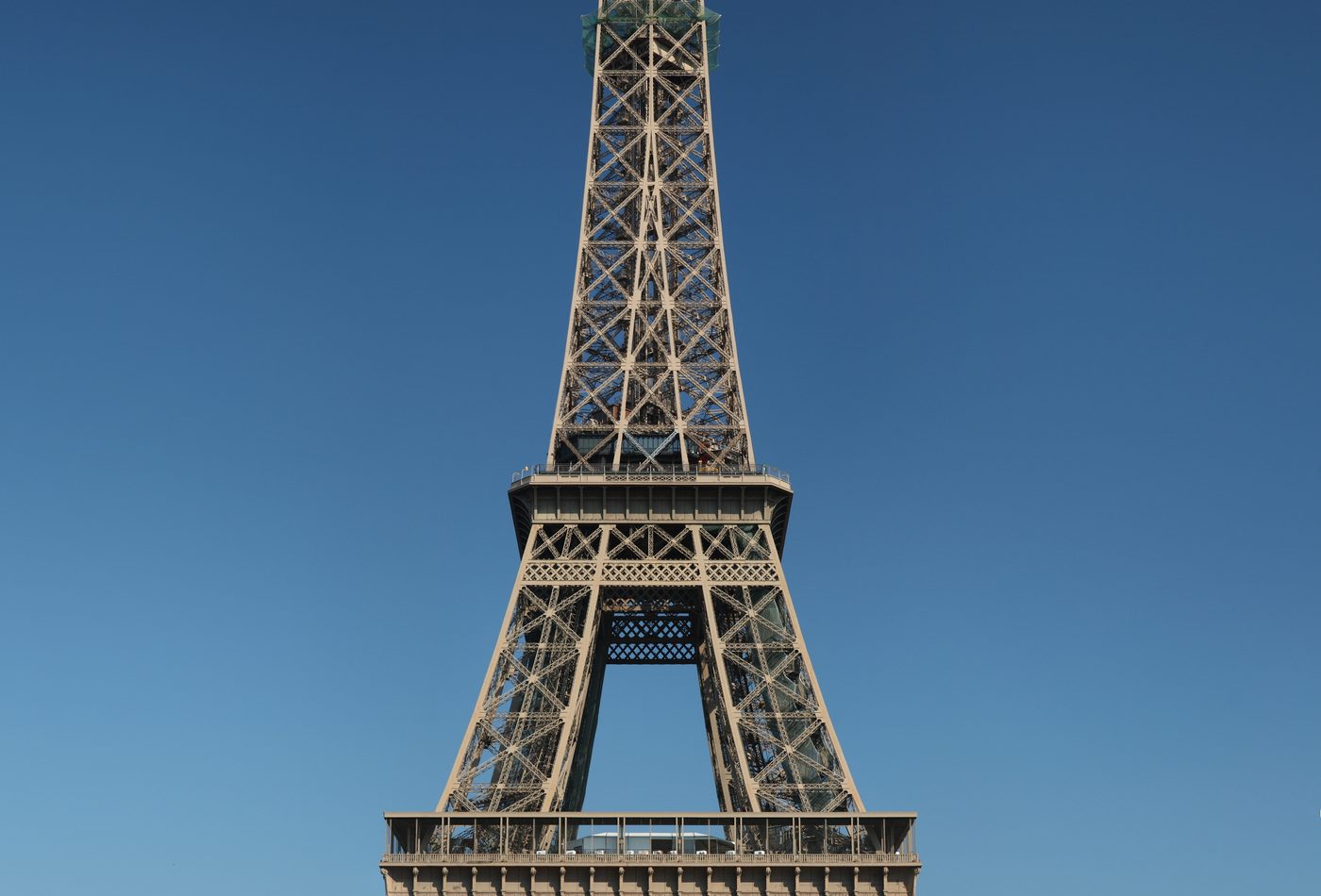
The Eiffel Tower is best read as a structure that refuses to hide how it stands. Its diagonals, platforms, legs, and tapering profile make the tower feel like a diagram of forces at city scale. That does not make it cold or purely technical. The design's power comes from turning calculation into a memorable silhouette. The viewer can understand the tower from far away, then keep finding smaller structural decisions up close.
The silhouette is simple, the lattice is not
From a distance, the tower is easy to remember: four legs, widening base, tapering shaft, upper platform, pointed top. Up close, that simple outline becomes a dense field of iron members. This two-level reading is the design's strength. A building that works only as a distant icon can become flat. A building that works only as detail can become illegible. The Eiffel Tower does both at once.
The base turns infrastructure into ceremony
The lower zone is more than support. It organizes arrival, frames views through the legs, and gives visitors a sense of crossing into the structure rather than standing beside it. The arches and spread feet make the tower feel intentional as a public monument, not only efficient as engineering. This is where the design becomes architectural: structure creates a threshold, a place to gather, and a way to understand scale.
Iron creates changing transparency
The iron lattice does not read the same way from every angle. Against open sky it can look delicate; against the city it can look dense; from below it can feel overwhelming. That changing transparency keeps the tower alive visually. It also explains why the tower can dominate Paris without behaving like a solid wall. Its presence is strong, but its material logic leaves air, light, and view inside the object.
Structure as ornament
The tower is often described through engineering, but its visible structure also works ornamentally. Repetition, rhythm, curvature, and bracing create visual pattern. The difference is that the ornament is not applied after construction; it emerges from the members that hold the tower together. That makes the tower a useful case for structural expression: the building's decoration and its logic are deeply linked.
How to compare the design
Compare the Eiffel Tower with the Sydney Opera House or Tokyo International Forum by asking what each project chooses to expose. Sydney exposes a roofscape and civic platform; Tokyo exposes a transparent interior structure; the Eiffel Tower exposes the act of standing up. That comparison is more useful than ranking icons because it shows different ways architecture can make engineering public.
Design reading check
The design should not be reduced to height. Height made the tower famous, but legibility made it last. A reader should be able to point to the widening base, the tapering profile, the open lattice, and the viewing platforms, then explain how those features turn a technical structure into a civic landmark.