guide
Dancing House History in Post-1989 Prague
A small building with a large public argument
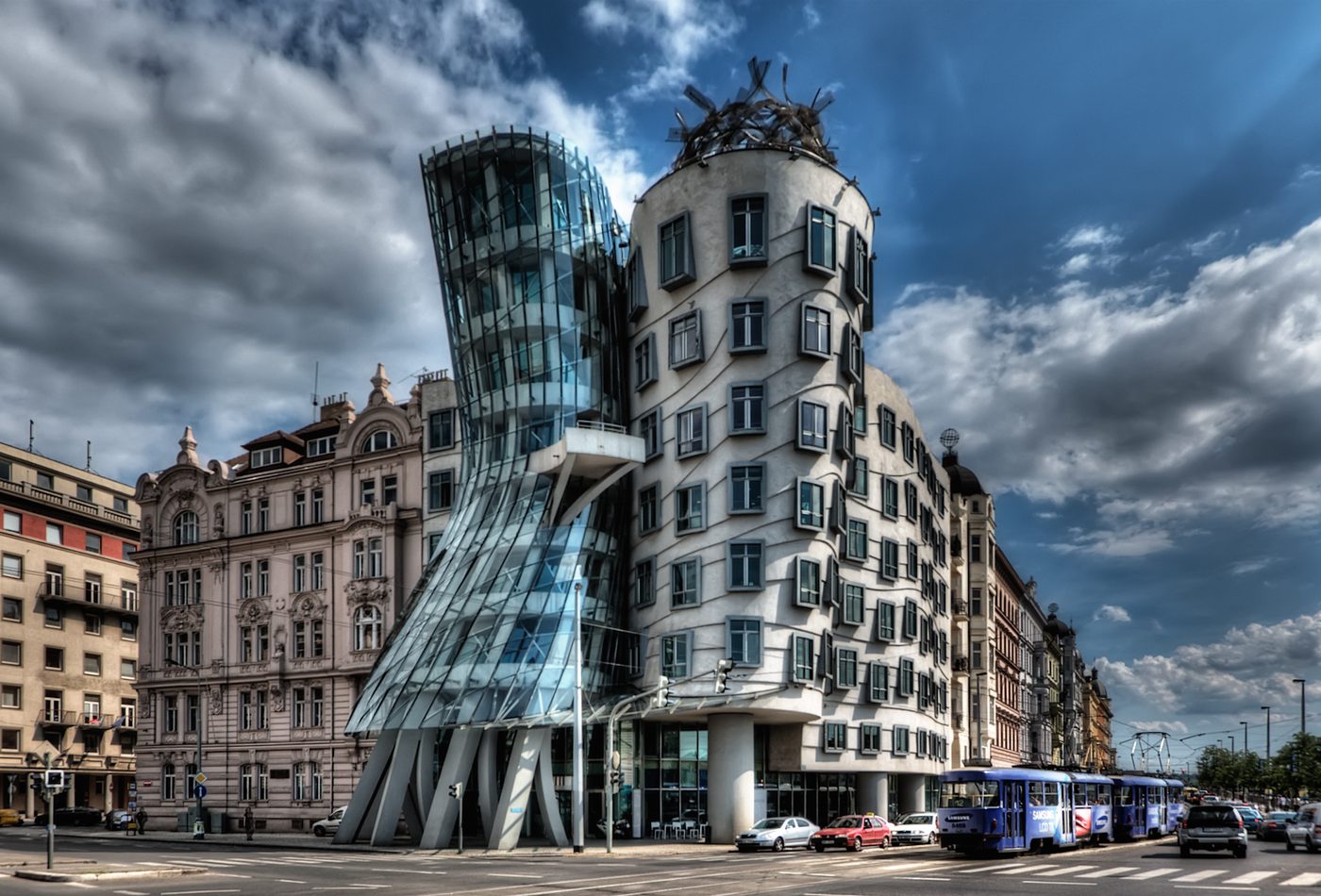
Dancing House matters historically because it made a modest office building carry a visible argument about Prague's contemporary identity. The building did not need a huge program to become famous. It used a corner site, paired volumes, and a strong contrast with older urban fabric to ask whether new architecture in Prague should blend into inherited form or make a clear break. That question is the real historical context.
Post-1989 Prague is part of the story
The building belongs to post-1989 Prague, a period when the city was re-entering international cultural and economic circuits after the end of communist rule. Contemporary design could become a signal of openness, risk, and change. That does not mean every unusual form from the period was automatically successful. Dancing House became memorable because its image was simple enough to circulate and its site was prominent enough to make the debate public.
The nickname helped the building travel
The dancing nickname is not just a marketing label. It gave non-specialists a way to remember the form. Architecture often enters public memory through names, stories, and comparisons as much as through drawings. The risk is that the nickname can flatten the building into a joke. The more useful reading treats the nickname as an entry point, then asks how the paired bodies, materials, and corner condition produce the sense of movement.
Why controversy matters here
The building's contrast with Prague's historic image made it controversial and visible. That controversy is not separate from the architecture. It reveals the expectations placed on buildings in a city known for layered historical character. The project asks whether a new building should be polite, quiet, contextual, theatrical, or deliberately disruptive. Its value lies in making that question concrete on a single street corner.
Cultural role beyond office use
As an office building, Dancing House has a practical commercial program. As a landmark, it performs a different role. It gives tours, postcards, architecture students, and city guides a contemporary counterpoint to Prague's older monuments. This second role explains why the building is remembered out of proportion to its size. It became a symbol of architectural change because people kept using it to talk about newness in an old city.
Legacy and limitation
The legacy of Dancing House should be handled carefully. It is not proof that every historic city needs an attention-grabbing object. It is proof that a small contemporary building can become a public reference point when form, site, story, and timing align. Its limitation is the same as its strength: the building is easy to reduce to a nickname. Good historical reading should keep the broader urban and cultural question visible.
Historical reading check
The history should change how the building is seen. The leaning glass tower should no longer look only playful; it should read as a public sign of post-1989 openness and debate. The stone and glass contrast should no longer look like decoration; it should read as a visible negotiation between Prague's inherited image and a new architectural language.