guide
Dancing House Facts: Prague Corner and Twin Forms
The corner is the first fact
Dancing House is an office building in Prague completed in 1996, but the fact that matters first is its corner site. The building does not sit in an open field where a sculptural object can be judged alone. It presses into a street wall near the river and turns a tight urban corner into a public image. That setting explains why the leaning forms feel so forceful: the design is arguing with the regularity of the surrounding city fabric.
Two towers, two characters
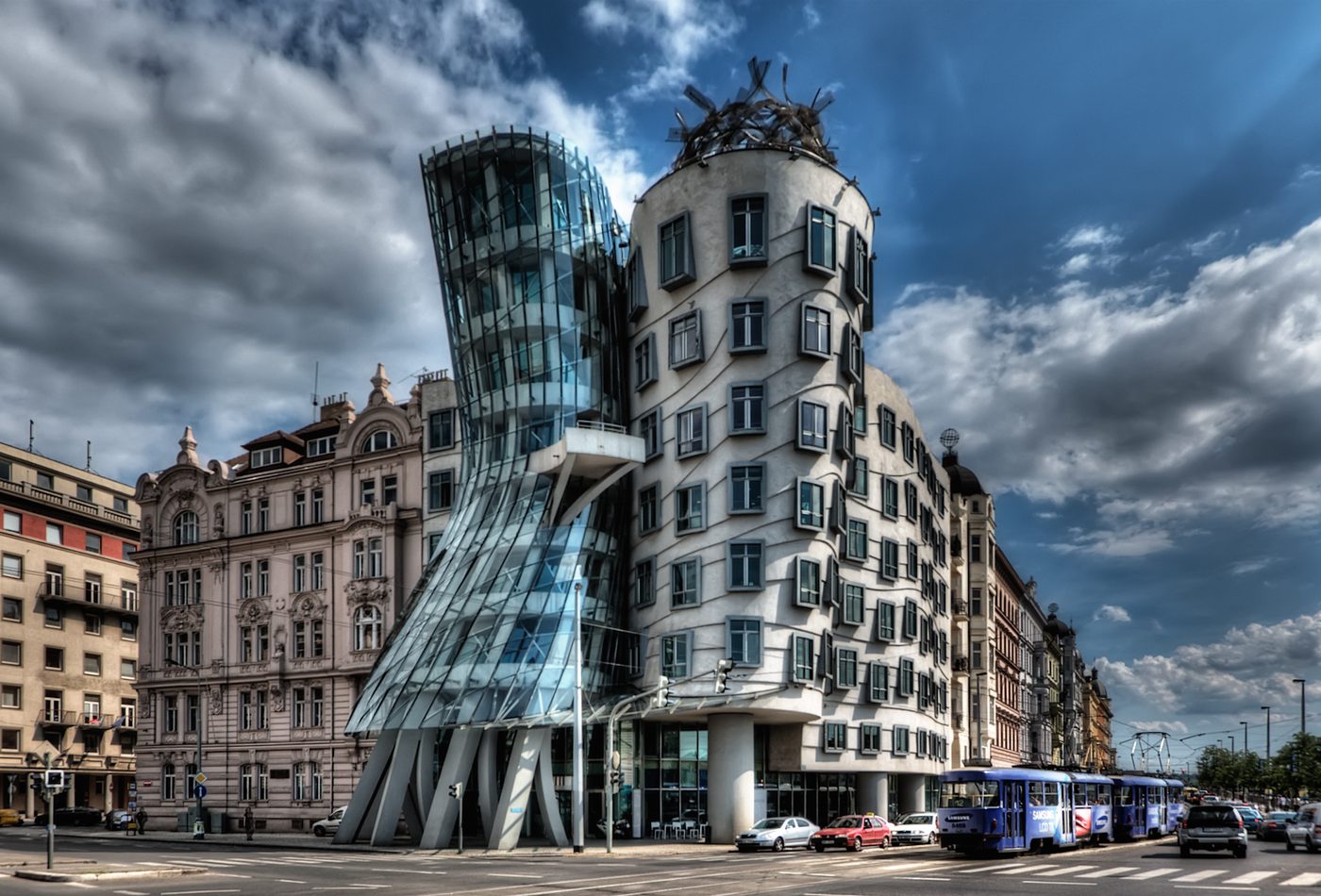
The building's famous image comes from a pair of volumes. One is more solid, with pushed and angled window lines; the other is glassy, compressed, and visibly in motion. The nickname suggests dancing figures, but the architectural reading should be more precise. The design uses contrast between mass and transparency, stillness and movement, street wall and twist. The two parts make the corner legible from a distance and more complex up close.
Why the year 1996 matters
The date places the project in post-1989 Prague, when contemporary architecture could become part of a city strongly associated with historic continuity. That does not mean the building is important only because it is unusual. It matters because it shows how a new office building could carry cultural symbolism through form. The design made a small commercial program visible inside a larger debate about modern Prague.
Glass, concrete, steel, and street rhythm
The material palette includes glass, concrete, and steel, but the key is how those materials separate the two figures. Glass makes one tower lighter and more exposed. Concrete gives the other mass and surface depth. Steel supports the more delicate gestures and crown-like top. Together they let the building read as a pair without losing the discipline needed for a working office building on a real corner lot.
What to notice first
Start with the glass tower's compressed waist, the angled window rhythm of the more solid tower, and the way the building turns the corner. Those details make the concept visible. The building is not simply bent for effect. Its value comes from how movement is controlled, where the body seems to tighten, how the facade keeps a relation to the street, and how the top prevents the composition from becoming too smooth.
How the facts should be used
Use the basic facts to avoid a shallow reading. The type tells you this is an office building, so its theatrical form had to coexist with leasable space and urban frontage. The date tells you it belongs to a specific moment in Prague's recent architectural history. The materials tell you how transparency and solidity divide the paired figures. The site tells you why the building's movement feels public rather than private.
Quick fact reading check
A useful fact sheet should help the reader see why Dancing House is more than a novelty. If the page leaves only the nickname, it has failed. The better reading connects the nickname to a corner site, two-part massing, material contrast, post-communist urban context, and the careful difference between controlled distortion and arbitrary shape.