guide
Palace of Versailles Visit Notes: Hall, Axis, and Gardens
Start before the famous rooms
Begin with the approach rather than with the Hall of Mirrors. Watch how gates, courtyards, long wings, roofline, gilding, and paving control expectation before the interior appears. Versailles is designed to make arrival feel staged. That first sequence matters because the palace is not only a collection of beautiful rooms. It is a system that turns distance, threshold, and waiting into architectural experience. A strong visit starts by noticing how the estate receives the body.
Use the courtyard as a scale test
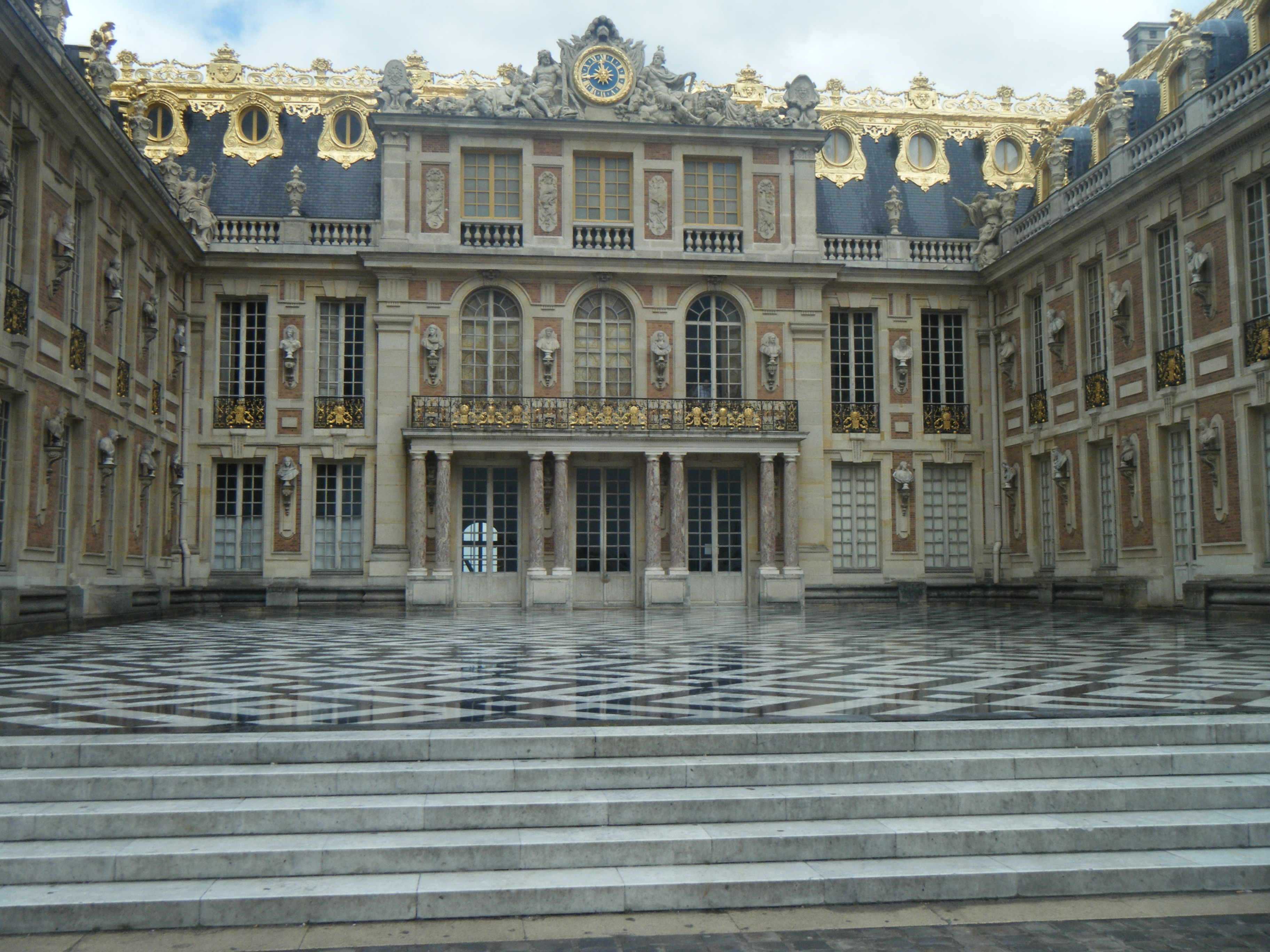
The marble courtyard and surrounding fronts are useful because they compress the palace's language into a readable exterior condition. Look for symmetry, repeated windows, sculptural roofline, gilded detail, and the relationship between side wings and central emphasis. Do not photograph only the richest ornament. Step back far enough to see how repetition works. Versailles depends on the difference between local glitter and broad order, and the courtyard lets both be seen together.
Read the Hall of Mirrors as movement
Inside the Hall of Mirrors, avoid treating the room as one static photograph. Walk slowly and compare the window side with the mirror side. The 17 windows and 17 mirror arches set up a rhythm, while the 357 mirrors multiply light and bodies. The important question is what the gallery does to movement. It stretches ceremony into a long public display and makes the garden view part of the interior.
Look from palace to garden
Find the moment where the garden axis becomes visible from the palace. The Grande Perspective is not only a view; it is a design argument. It tells the visitor that order continues beyond the rooms into landscape. Use this sightline to connect the Hall of Mirrors, central palace body, Royal Way, fountains, and Grand Canal. The visit becomes sharper when the garden is read as architecture at a larger scale rather than as scenery after the building.
Separate surface richness from route
Versailles can overwhelm because surfaces are busy: marble, gilding, mirrors, painted ceilings, sculpture, patterned floors, and framed views. Choose one route question before studying detail. Ask where the room wants you to stand, where it sends your eye, how it controls light, and what it lets you see next. Then look at surface. This order prevents the visit from becoming only ornament hunting and keeps the architecture of control visible.
Use the gardens to slow down
The gardens need time because their design is based on distance, repetition, and controlled surprise. Walk part of the axis, then turn into a side path or grove if access and conditions allow. Compare open perspective with enclosed garden rooms. Look for how water, clipped planting, sculpture, gravel, and sightlines manage pace. The estate becomes more legible when the visitor feels the difference between formal view and lateral pause.
End with one comparison
Before leaving, compare Versailles with another building in the atlas. The Taj Mahal also uses an axis, water, and controlled approach, but it concentrates memory around a mausoleum. St Peter's Basilica also stages public authority, but it does so through square, facade, nave, and dome. Versailles is distinctive because palace, interior, garden, and court memory work as one distributed system. A good visit should leave that difference clear.
Build a five-view record
A useful architecture record should include five views: the court approach, one facade or roofline detail, the Hall of Mirrors rhythm, the central garden axis, and one garden detail such as water, path, planting, or sculpture. These five images preserve the main evidence: arrival, order, reflection, landscape projection, and close material control. They also protect the visit from becoming only a mirror-room photograph.