guide
Palace of Versailles Design: Axis, Reflection, and Ceremony
The design is power arranged as sequence
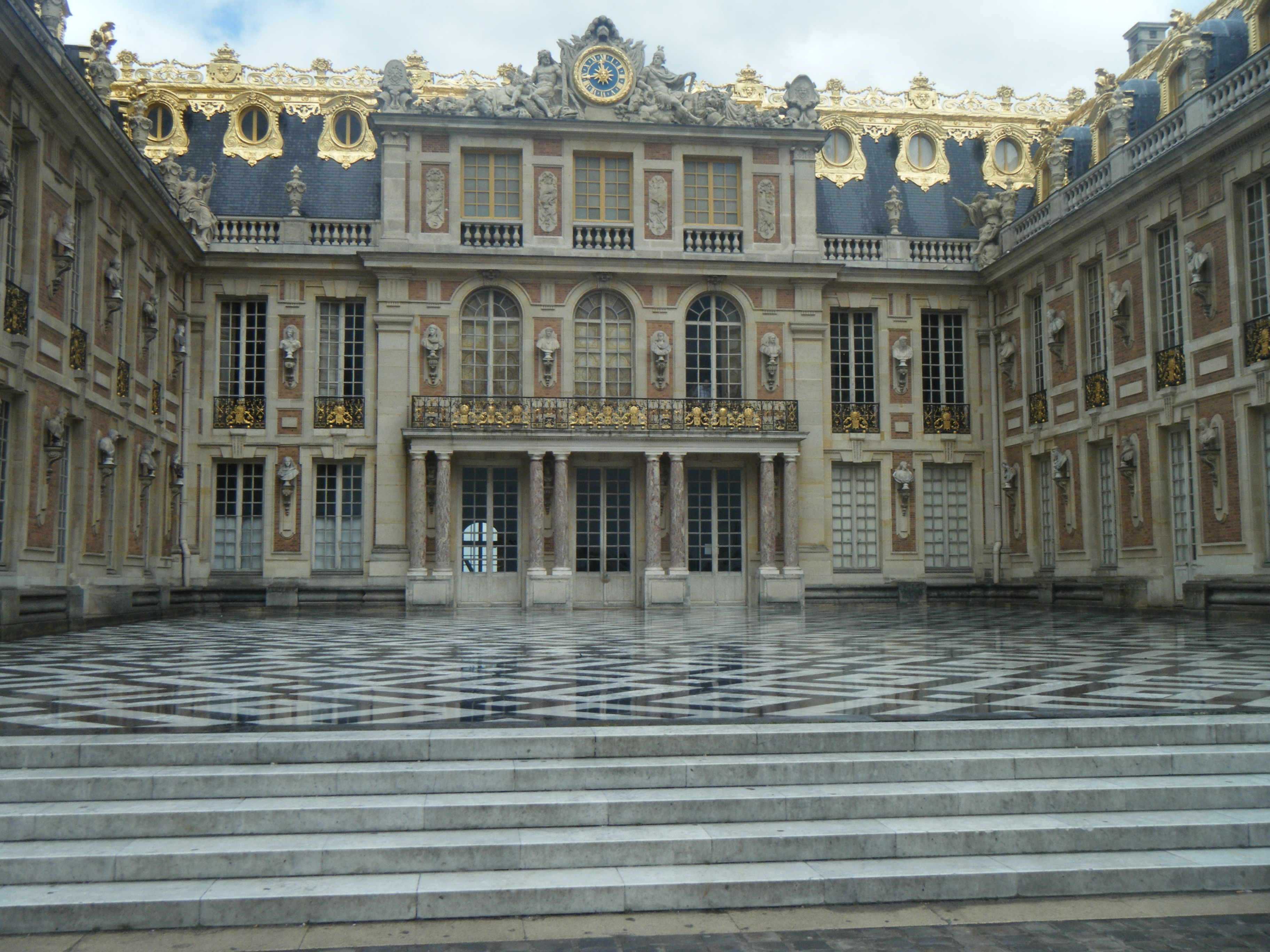
Versailles is weakly described when it is reduced to gilding, mirrors, or royal luxury. The design works by sequencing power. Forecourts establish approach, wings stretch authority horizontally, rooms sort access, and gardens extend order beyond the building. A visitor does not simply enter a palace. The visitor is directed through spaces that make rank, waiting, visibility, and ceremony physical. That is the central design lesson: architecture can turn hierarchy into a route.
Axis is the main structural idea
The most important design structure at Versailles is not an exposed frame but an axial system. The palace and gardens line up views, rooms, paths, pools, and distant landscape into a controlled perspective. This does not mean everything is simple symmetry. It means that the estate repeatedly asks the visitor to orient the body toward a center, a view, or a ceremonial line. The axis is a way of organizing attention, and attention is the real material of court architecture.
The Hall of Mirrors turns view into ceremony
The Hall of Mirrors is a design instrument because it makes outside and inside reinforce each other. Windows face the garden, while mirrors opposite them multiply light and reflection. The long gallery turns walking into display, and the repeated arches make bodies, chandeliers, garden light, and gilded surfaces part of one rhythm. Its design is not only visual richness. It is a controlled exchange between view, reflection, movement, and political image.
Room hierarchy is architectural control
The palace contains thousands of rooms, but design meaning comes from hierarchy rather than count alone. Apartments, galleries, salons, service zones, chapels, and passage spaces do not have equal public force. Some spaces draw visitors forward; others filter them; others are remembered because they concentrate ceremony. This hierarchy gives Versailles its particular pressure. A palace room is never only a room. It is also a statement about who can stand there, who can pass through, and what can be seen.
Landscape behaves like architecture
Le Notre's gardens should be read as architectural design at landscape scale. The Grande Perspective, Royal Way, groves, fountains, and Grand Canal extend the same ordering habit beyond the walls. Trees, water, gravel, sculpture, and clipped planting perform like columns, corridors, surfaces, and thresholds. This is why the garden cannot be treated as decoration. It gives the palace a second body, one that organizes distance and lets authority appear to continue toward the horizon.
Materials serve legibility
Stone, marble, glass, mirrors, gilding, water, and planting are not only expensive materials. They make the hierarchy readable. Gilding catches attention at thresholds and rooflines; mirrors multiply light and court image; marble gives ceremonial interiors weight; water anchors long views; clipped vegetation keeps distance under control. The material palette is therefore disciplined rather than random. Richness works because it is attached to route, axis, rank, and view.
Design comparison
Compare Versailles with the Taj Mahal and St Peter's Basilica, but do not compare only size or fame. The Taj Mahal uses a centered tomb, garden axis, marble surface, and river edge to focus memory. St Peter's uses square, facade, nave, crossing, and dome to organize pilgrimage and papal ceremony. Versailles is different because its power is more distributed. The building, gardens, rooms, mirrors, and court routes all participate in a single system of staged authority.