guide
Palace of Versailles Facts: Rooms, Mirrors, and Garden Axis
The old hunting pavilion matters
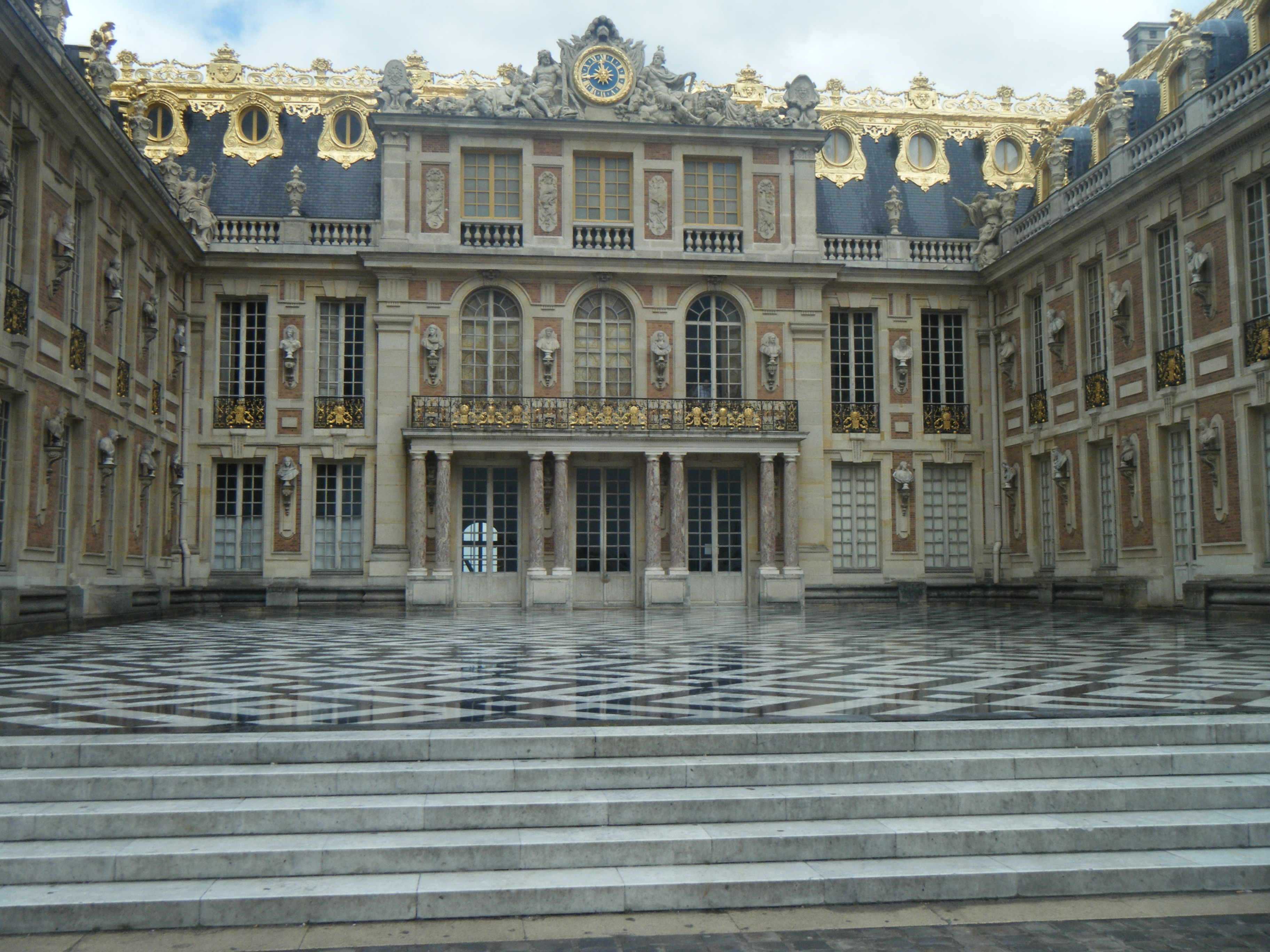
A useful Versailles fact page should begin before the famous state image. The palace grew from Louis XIII's hunting pavilion, then was transformed and extended under Louis XIV into a royal center of government, ceremony, and display. That origin matters because Versailles is not simply a large palace placed in a park. It is an architectural expansion of power from a smaller royal retreat into an estate where rooms, approaches, gardens, and court life were made to reinforce one another.
1682 turns architecture into government
The date 1682 is essential because Louis XIV installed the court and government at Versailles. That move changes how the building should be read. The palace was not only a residence or backdrop for luxury; it became a spatial system for watching, approaching, waiting, attending, and performing rank. The building's architectural importance comes from this connection between design and administration. A room sequence, a gate, or a garden view is also a political instrument when court life is organized around it.
The palace scale is measurable
The official palace guide records 2,300 rooms over 63,154 square meters. Those numbers are not decorative trivia. They explain why Versailles cannot be understood as one facade or one famous interior. The estate works through accumulation: apartments, galleries, chapels, service rooms, courtyards, passages, and museum spaces. The large count also helps readers see why hierarchy is architectural here. A visitor is constantly sorted by threshold, room size, sequence, access, and distance from the most ceremonial spaces.
The Hall of Mirrors is a fact and a device
The Hall of Mirrors is the most famous room because it condenses the palace's logic into one legible space. It replaced an earlier terrace, was designed by Jules Hardouin-Mansart, and was built between 1678 and 1684. Its 73-meter length, 357 mirrors, 17 mirror arches, and 17 windows opposite the garden side are facts that explain experience. The room multiplies light, bodies, garden views, and ceremonial image. It is not only a beautiful gallery; it is an optical machine for royal display.
The gardens are not secondary scenery
Versailles should not be split into building first and garden later. Andre Le Notre's gardens were entrusted to him in 1661, and the work continued for about 40 years. The Grande Perspective, Royal Way, fountains, groves, and Grand Canal show architecture projected into landscape. The gardens convert walking, looking, and distance into order. This is why the palace's facts must include the estate outside the walls. The building's authority continues through clipped planting, water, gravel, and long axial views.
1837 changes the public role
In 1837 the palace became the Museum of the History of France. That later role matters because Versailles is now read through several layers at once: royal residence, seat of court, revolutionary memory, museum, national monument, and tourist site. The museum conversion did not erase the earlier court system, but it changed the visitor's relation to it. Rooms that once structured rank and access now teach history through display, preservation, and public circulation.
What the facts should help you see
The basic facts should leave a reader with a sharper route through the estate. Start with the hunting pavilion origin, then the 1682 court move, then the 2,300-room scale, then the Hall of Mirrors, then the gardens and later museum role. Together they explain why Versailles is not just a palace with ornament. It is a coordinated system of residence, government, spectacle, landscape, memory, and controlled movement.