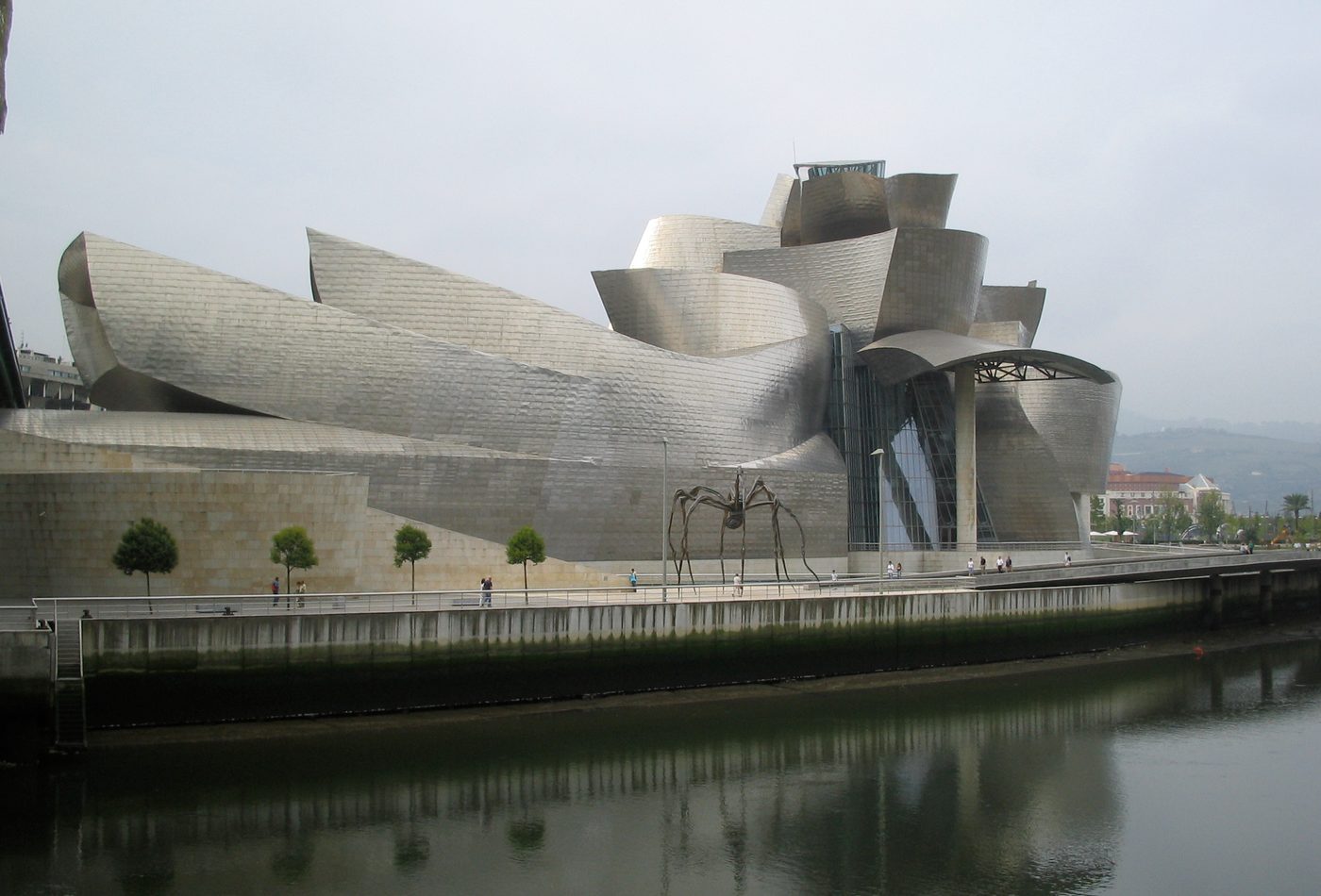
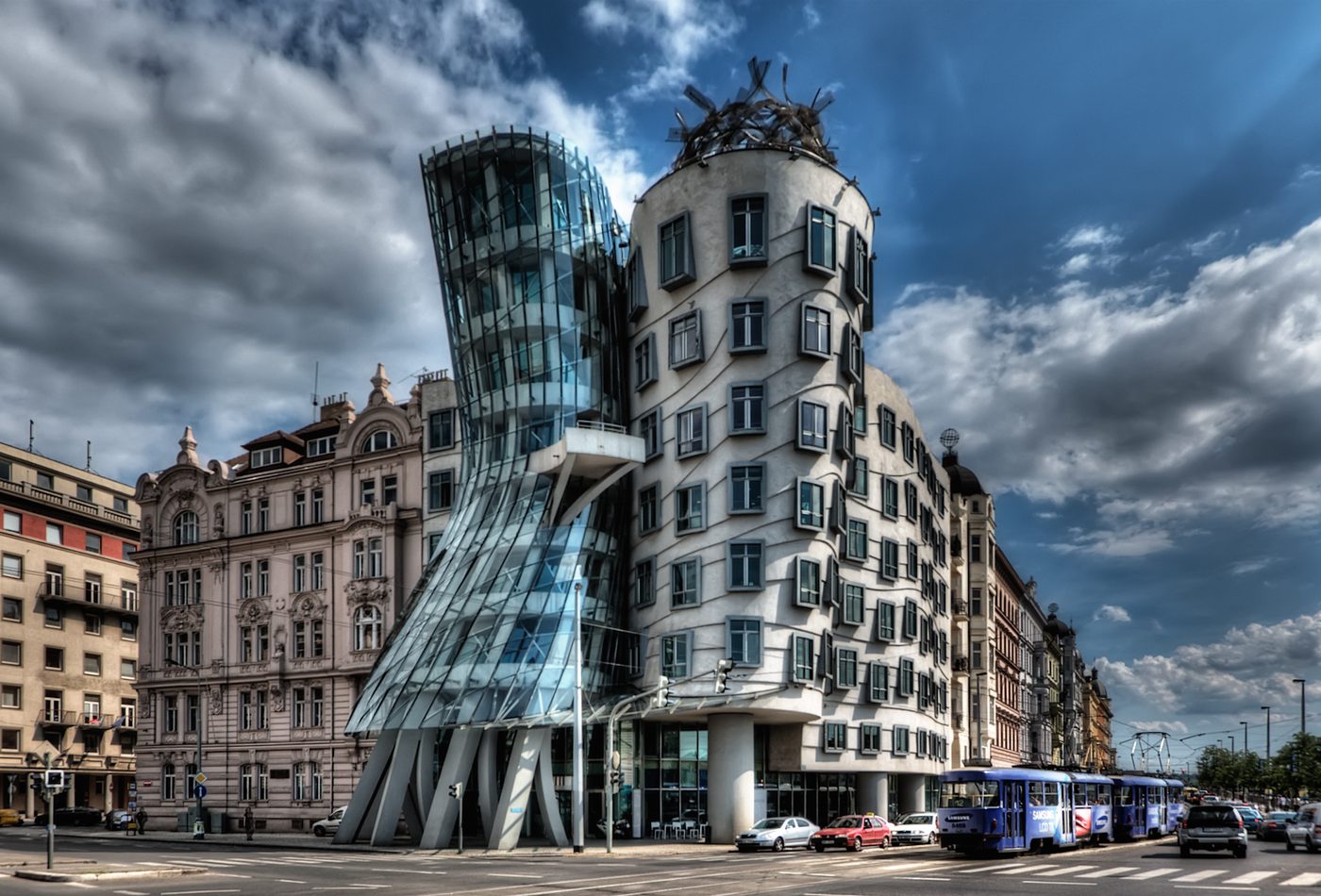
Frank Gehry buildings are easiest to read here through Guggenheim Museum Bilbao and Dancing House. Bilbao gives the strongest metal-skin and city-effect example; Dancing House gives a smaller urban corner where controlled distortion is easier to compare. Start with those two before treating the name as a biography search.
What the comparison shows
Use three checks: how the form moves, how the skin catches light, and how the building changes its street or riverfront. Guggenheim Museum Bilbao uses titanium curves, an atrium sequence, and a river edge to make a museum act like a city image. Dancing House uses two bending volumes, a tight Prague site, and glass against heavier mass to make motion visible at street scale.
City effect, not only reputation
The useful Gehry question is not simply whether a building is famous. Ask whether its form creates new public movement, a new skyline memory, or a new way to describe the district around it. That is why the Bilbao page belongs first: it lets readers test the often-repeated Bilbao effect against materials, site, tourism image, and the limits of turning one museum into a city formula.
Open next for a reason
Open Guggenheim Museum Bilbao when the question is titanium, digital form, museum movement, or city image. Open Dancing House when the question is a smaller corner building, post-1989 Prague, and the difference between playful deformation and random shape. Then use the deconstructivist style page only after the two projects make the visible features concrete.
What not to overclaim
A Gehry search can become too broad if every unusual curve is treated as the same design idea. Keep the page grounded in visible evidence: Bilbao uses a riverfront museum, reflective titanium, and overlapping volumes; Dancing House uses a street corner, paired figures, and a tighter urban contrast. Those differences matter because they show how one architect can use movement at different scales.
A better reading order
Read the Bilbao guide first for the large public image, then read Dancing House for the smaller corner condition. After that, compare materials, skyline role, approach sequence, and the first detail that holds attention. This order gives the page a practical purpose: it turns a name search into a way to test form, surface, public movement, and city memory.
Search clue to carry forward
The strongest search clue is controlled surprise. Gehry pages become clearer when the reader asks where the surprise is located: metal skin, corner massing, gallery movement, reflection, or city branding. That question prevents a broad architect query from collapsing into a photo list and gives each linked building a specific job in the comparison.