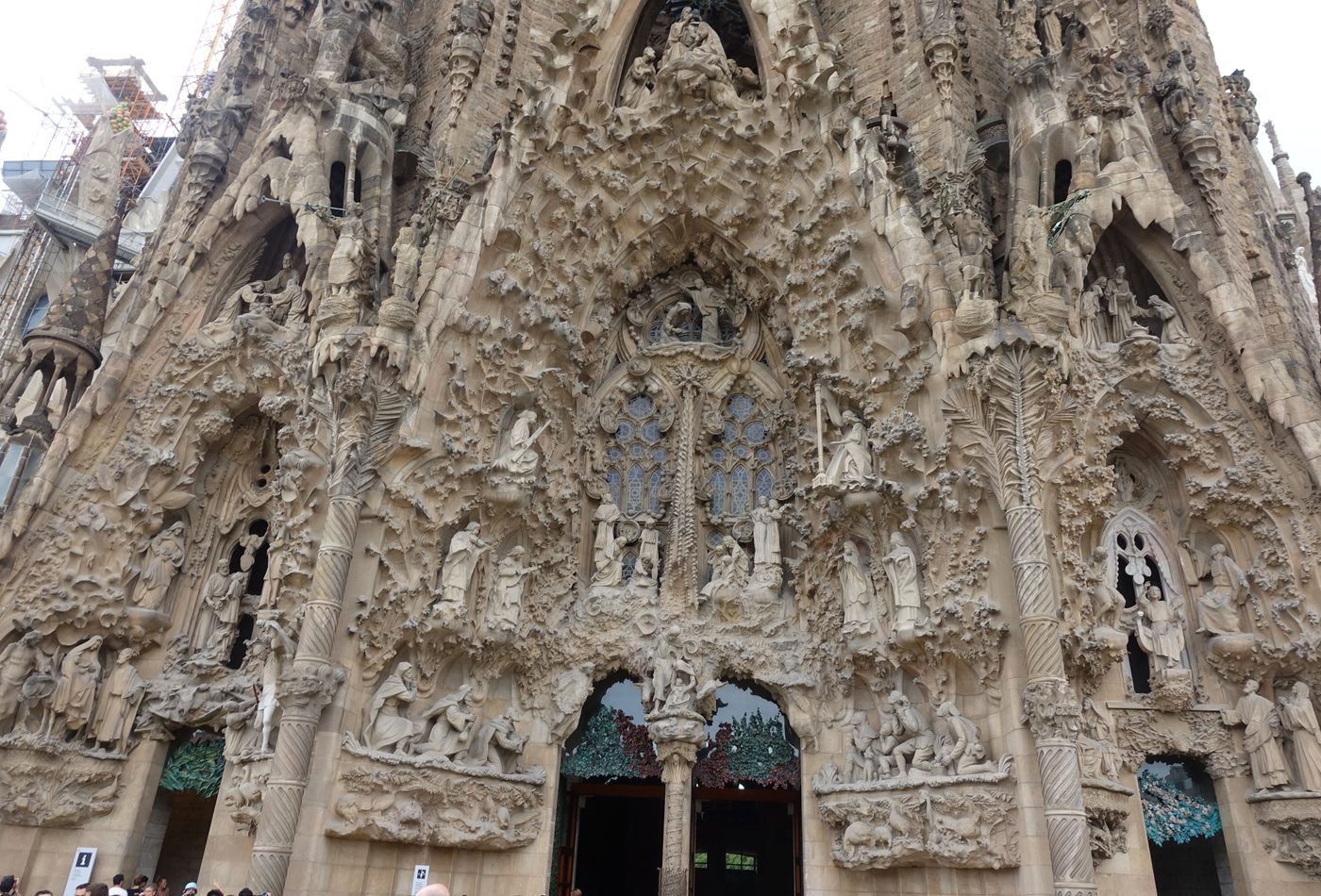
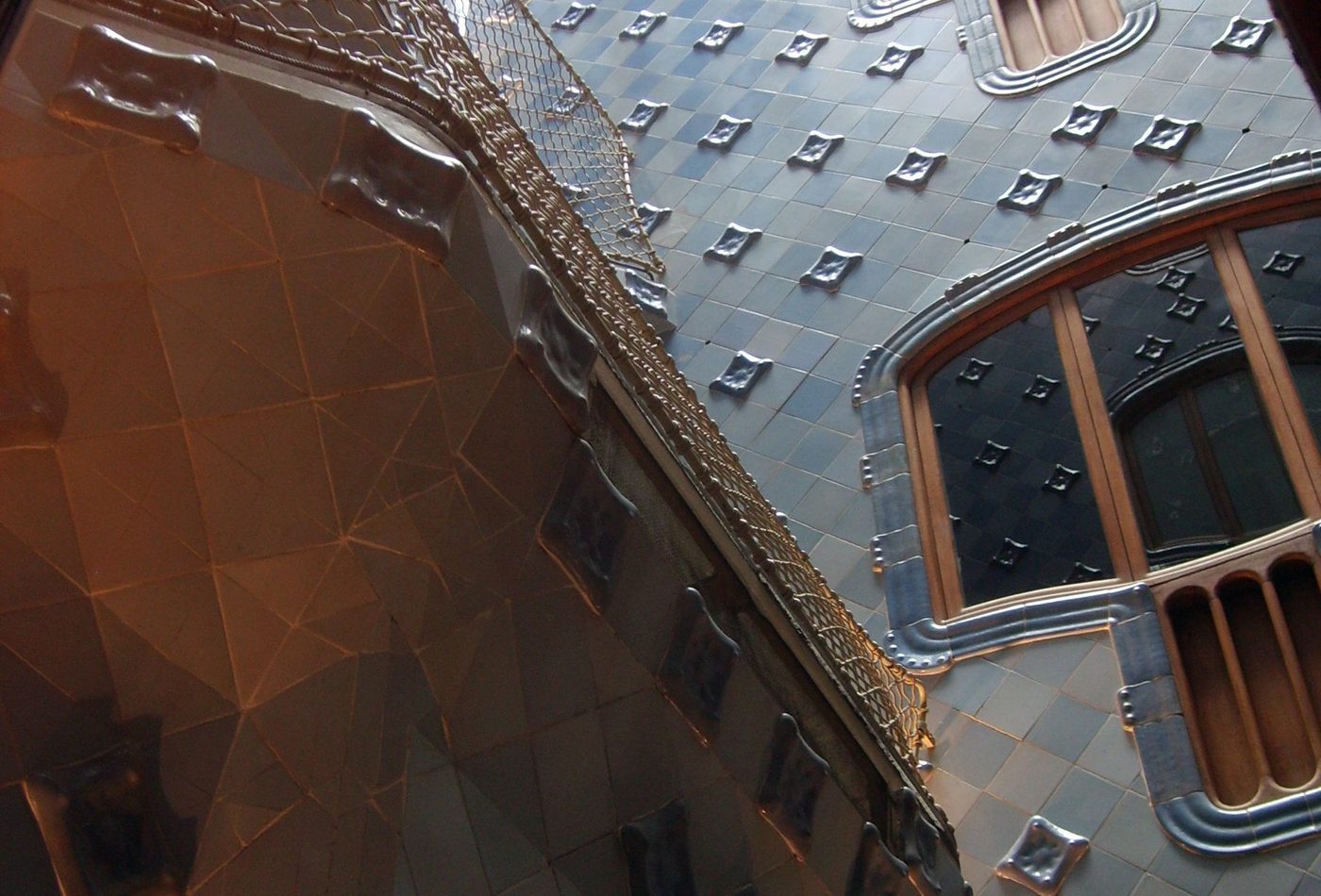
Antoni Gaudi buildings are most useful here as a Barcelona comparison between Sagrada Familia and Casa Batllo. Sagrada Familia shows religious program, branching columns, towers, and long construction time. Casa Batllo shows a domestic facade, blue lightwell, roofline, ceramic surface, and a smaller scale where craft can be read close up.
The Gaudi checklist
Use four checks before treating a feature as Gaudi-like: organic form, structural logic, craft detail, and symbolic program. Organic form appears in curves and bone-like frames; structural logic appears in columns, arches, and roof shapes; craft detail appears in tile, iron, glass, and carved surfaces; symbolic program appears most strongly in Sagrada Familia's religious imagery.
Modernisme in context
Barcelona Modernisme overlaps with Art Nouveau, but it should not be flattened into the whole European style. On this page, Gaudi is a local Barcelona lens: Eixample streets, Catalan craft, religious ambition, and domestic renovation all matter. That makes Casa Batllo a different kind of evidence from Sagrada Familia, even though both carry organic detail.
Open next for a reason
Open Sagrada Familia when the question is towers, light, structure, religion, or the long unfinished project. Open Casa Batllo when the question is facade skin, color, lightwell, roofline, or how Modernisme works inside a city apartment block. Then compare the Art Nouveau page to see which features travel beyond Barcelona.
Scale changes the evidence
Do not read every Gaudi building through the same scale. Sagrada Familia works through basilica space, vertical ambition, symbolic sculpture, and a long construction story. Casa Batllo works through a narrow urban lot, domestic rooms, ceramic skin, and a facade that rewards close looking. The contrast keeps organic form from becoming a vague label.
What to test next
After opening one Gaudi page, test one concrete clue on another page: how a column branches, how tile changes color, how a roofline turns into an image, or how light moves through the building. That small test makes the architect page more useful than a list because it gives the reader a repeatable way to compare craft, structure, and city setting.
Search clue to carry forward
The strongest search clue is built craft. On a Gaudi page, curves matter because they are tied to structure, symbolism, material, and hand-scaled detail. If a reader can name the craft clue before opening the next guide, the page has done more than repeat an architect biography.