guide
Villa Savoye: modern house manifesto and preservation
Historical frame
Villa Savoye is a house in Poissy, France. The atlas records it with a year marker of 1931, a material palette of reinforced concrete, glass, and plaster, and a style reading of Modernist Architecture, and International Style. That framing matters because the building is not just a name on a list; it is a visible case study in how architecture turns structure, program, site, and public memory into a built object. The historical question is not only when the building was completed or begun. It is why that moment needed this kind of architecture. The year marker of 1931 places the building in a timeline of technology, patronage, cultural ambition, urban growth, and public taste.
Cultural role
Villa Savoye is useful because it carries more than practical function. A landmark can represent religious devotion, civic power, cultural modernization, tourism, national identity, commercial ambition, or a new way of living. Its type, house, gives one part of the answer, but its visibility in Poissy gives another. Architecture becomes cultural when people repeatedly use it to explain a place.
Why it became memorable
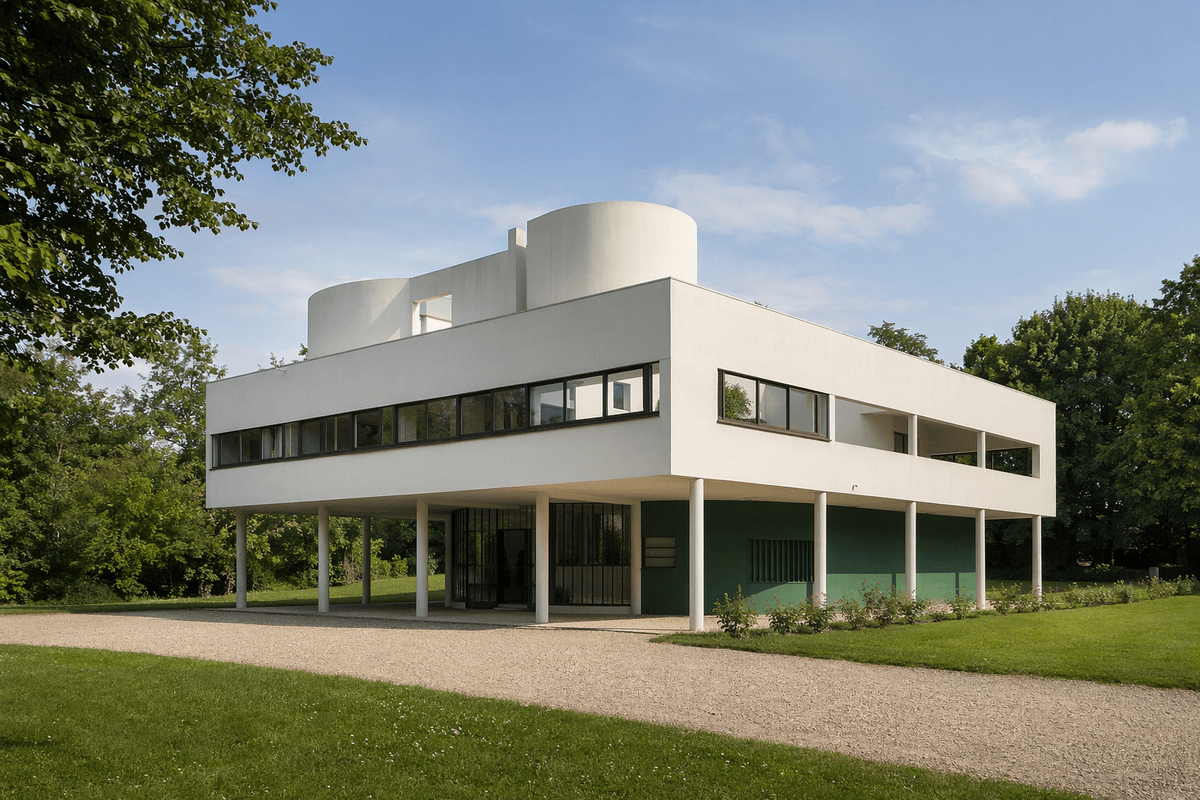
A building usually becomes memorable through a combination of image, story, and repeated public encounter. For this landmark, the memorable elements include pilotis, ribbon windows, and roof terrace. Those features allow the building to circulate in photos and guidebooks, but they also help people navigate it physically. The historical importance grows when a recognizable image also changes how people understand a city or style.
Style in context
The style context here is Modernist Architecture, and International Style. Styles are historical tools because they show what designers, builders, patrons, and publics thought architecture should communicate. A style may revive an older language, reject ornament, celebrate technology, dramatize structure, or create a new public identity. Reading the style of Villa Savoye helps connect one building to a larger architectural conversation.
Material memory
Materials such as reinforced concrete, glass, and plaster are part of the historical record. They point to local craft, industrial capacity, budget, maintenance, climate, and symbolic intent. The same material can mean different things in different periods, so the important question is how it is used. Is it load-bearing, decorative, reflective, monumental, delicate, modular, or expressive?
Legacy and related works
The legacy of Villa Savoye becomes clearer when compared with Torre Glories, and Fallingwater. Related works show whether the landmark belongs to a long tradition, a technical breakthrough, a civic trend, or a highly individual design moment. That broader context turns a history page into a map for continued discovery.
A practical reading path
Keep three checks together as you read Villa Savoye: the city view, the material evidence close to hand, and the sibling guide that answers the next question. Start with pilotis, ribbon windows, and roof terrace, then test whether those clues connect to reinforced concrete, glass, and plaster, the building's role as a house, and related works such as Torre Glories, and Fallingwater. That route turns the page into a usable study path instead of a one-off description.
Where this guide fits
This guide focuses on one way to read Villa Savoye. Use the related links when the question changes from "what is it" to "how is it designed," "why is it famous," or "what should I notice in person." Keeping those questions separate makes the building easier to study without turning the page into a long undirected summary.