Zaha Hadid buildings, fluid forms, and what this page covers
A careful Zaha Hadid buildings page explaining fluid geometry, public-building reputation, and why this is a comparison path rather than a full career list.
Zaha Hadid buildings are usually searched for because readers want fluid geometry, continuous surfaces, sharp movement, and public buildings that feel less box-like than conventional modern architecture. This page should be used as a reading path for those ideas, not as a complete career catalogue.
Recognition clues
Look for sweeping roofs, ground planes that seem to fold upward, long interior movement lines, and forms that appear to be pulled by motion. The atlas should keep this page honest by using those clues as vocabulary, then pointing readers toward published comparison pages where curved form, city image, skin, and structure can be checked directly.
Keep the comparison honest
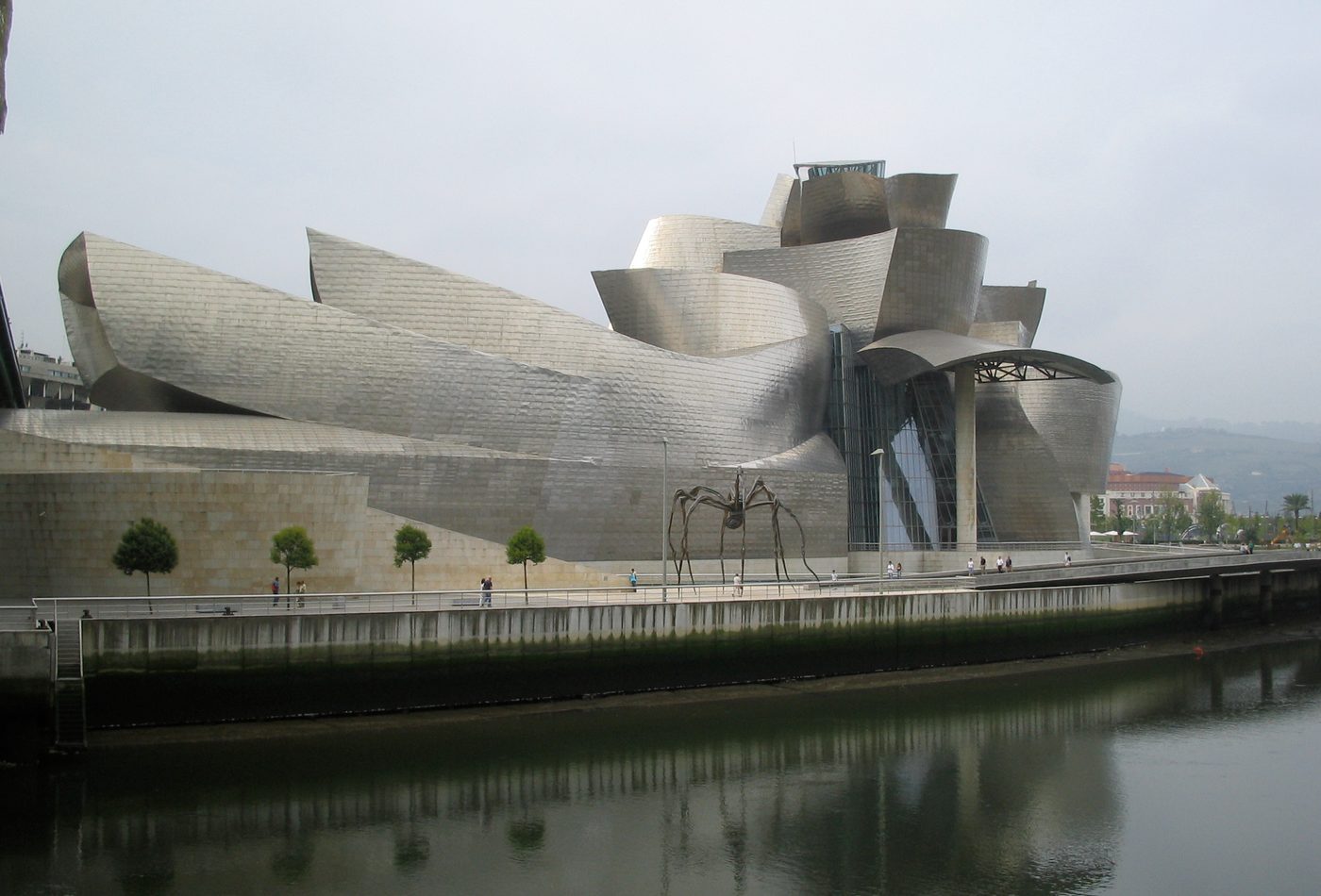
Curved public architecture is not automatically a Zaha Hadid building. Guggenheim Museum Bilbao is useful as a comparison for sculptural form and city image, but it is a Frank Gehry work, not a Hadid work. The safer question is what kind of motion the building creates: folded ground, flowing shell, fragmented metal, or tilted urban corner.
Best next move
Use this page to separate architect search from style search. If the question is Hadid specifically, keep the scope note in mind and compare with a fuller external career list. If the question is visual recognition, continue into deconstructivist and neo-futurist vocabulary, then return to building pages that make structure, skin, and public movement visible.
How this page stays useful
This page should not pretend the current atlas contains a complete Hadid catalogue. Its job is narrower: explain the visual question readers usually bring, name the limits of the current comparison set, and point toward published pages that make similar problems visible. That keeps the answer useful without mixing unavailable works into the public reading path.
Compare motion carefully
When comparing fluid geometry, ask whether motion comes from the roof, the ground plane, the facade, the plan, or the way a visitor moves through the building. A curved surface alone is not enough. The reader should leave with a clearer distinction between flowing form, sculptural metal, tilted massing, and ordinary smooth cladding.
Search clue to carry forward
The strongest search clue is continuity across public movement and spatial sequence. A useful Hadid-style reading asks whether floor, wall, roof, landscape, and circulation feel joined into one movement. When the atlas cannot show a full project list, this continuity test still helps readers separate a real design question from a loose image match.